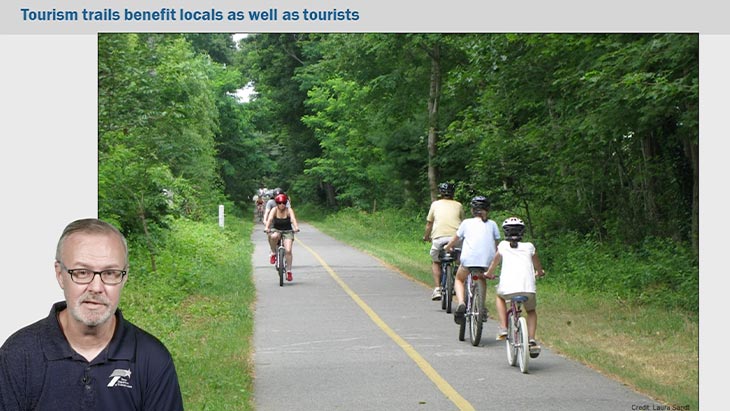
Avid bicyclists and walkers, as well as active transportation professionals, have personal experiences of the many benefits of walking and bicycling. However, it can be difficult to communicate those benefits effectively to decision makers. Though research on the benefits of creating safe and comfortable environmental conditions for walking and bicycling may not be sufficient by itself to convince decision makers, research evidence can be useful tools. Our research network searched for evidence of the benefits of designing transportation and recreation environments to support walking, bicycling, and other physical activities. Environmental attributes included parks, trails, bicycling and pedestrian facilities, greenery, and mixed land use. We found extensive evidence that these activity-supportive features are related to better health, injury reduction, and reducing air pollution. Perhaps the most important finding was that almost all the built environment features had evidence of economic benefits, with multiple beneficiaries. There are non-technical summaries of many of these benefits, which can be tools for advocacy.
Learning Objectives
- Identify the key environmental features that support walking and bicycling, including parks, trails, pedestrian and bicycling facilities, greenery, and mixed land use.
- Understand the relationship between activity-supportive environmental features and outcomes such as better health, injury reduction, and reduced air pollution.
- Analyze the economic benefits of designing transportation and recreation environments that support physical activities, including their impact on multiple beneficiaries.
- Develop strategies for effective advocacy by using non-technical summaries of research evidence to communicate the benefits of active transportation infrastructure to decision makers.
- Evaluate the challenges of communicating the benefits of walking and bicycling to decision makers and identify tools to improve advocacy efforts in promoting safe and comfortable environments for physical activity.