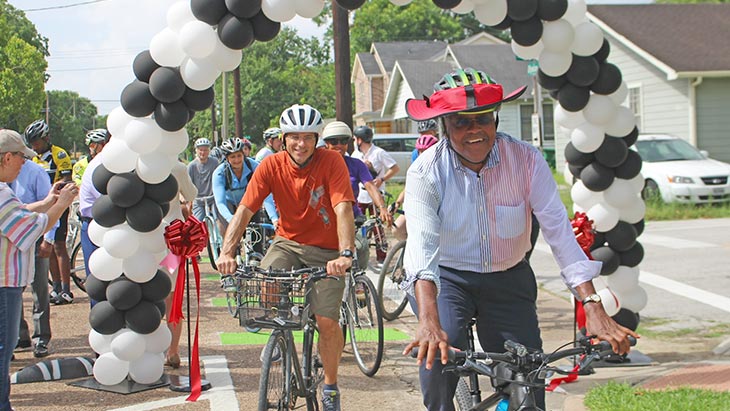
This course explores the innovative strategies of the Harris County Precinct One Ride One Bike Program, designed to bring the benefits of biking to historically underserved communities. Participants will learn how to foster active transportation through community-centered initiatives, focusing on the five E’s of bike safety: education, encouragement, enforcement, engineering, and evaluation. Through case studies, practical examples, and interactive discussions, the course highlights the program’s success in improving quality of life, health, mobility, and community cohesion by providing free bike access, safety education, and infrastructure development tailored to low-income neighborhoods.
By examining the Ride One model’s approach, including its fleet of 302 bikes, free repair clinics, and partnerships with local organizations, participants will gain insights into creating inclusive biking programs. The course will address challenges such as economic barriers, safe infrastructure development, and community outreach, with a focus on equity and accessibility. Learners will leave equipped to advocate for and implement active transportation initiatives that empower diverse populations, drawing inspiration from the program’s recognition by the League of American Bicyclists and Bike Houston.
Learning Objectives
- Evaluate the impact of active transportation programs on community health, mobility, and economic opportunities through data collection, participant feedback, and partnerships with local organizations.ility throughout the county.
- Learn best practices from a government-led bike program, such as the Harris County Precinct One Ride One Bike Program, to design and implement effective community biking initiatives.
- Develop strategies to activate safe bike infrastructure and trails that are accessible and welcoming for all ages and abilities, including the use of protected bike lanes and multi-use trails.
- Understand the steps to start and manage a bike program, including securing funding, acquiring diverse bike fleets, and organizing community outreach efforts.
- Explore methods for providing accessible biking resources, such as free bike rentals and safety classes, to address economic and social barriers in underserved communities.